We post jet engines. People sign up with sheet metal.

By Max Buining, who builds extrudo · 3 min read
Our Instagram is full of jet engines, V8s and helicopter rotor heads. People watch those. So I assumed the people signing up would want engines too.
The waitlist form has one open question: what kind of parts do you make? By 6 November, 131 people had given a usable answer, from 39 countries. We went through them one by one and sorted them.
Three people mentioned engines. Twenty-nine mentioned sheet metal.
The real picture
Put together, 77 of the 131 answers (59%) are about ordinary machine building: sheet metal, welding, frames, machines, machine parts and fixtures. Another 25 (19%) mention aircraft, drones, cars or robots.
It makes sense when you think about who uses SOLIDWORKS all day. The answers read like a tour of the industry nobody makes reels about: packaging machines, transformer tanks, farm machinery, trailers, industrial fans, heat exchangers, gates and handrails, medical devices.
A jet engine makes someone stop scrolling. Then they sign up because they have a sheet metal enclosure due on Friday.
One thing to keep us honest: the form's example text says "Sheet metal, machine frames, fixtures", and nine people typed only that. Without them sheet metal drops to 20, just below machine parts. Among people who signed up with a company email it still leads clearly, 13 to 5.
What's in it for you
If you're one of those people, here's where your kind of work stands.
Sheet metal (29). The control cabinet is the one to look at: 7 sheet metal parts in 1 to 3 mm, a DXF flat pattern of each with its bend lines, the blank sizes, and a door that opens on its hinges.
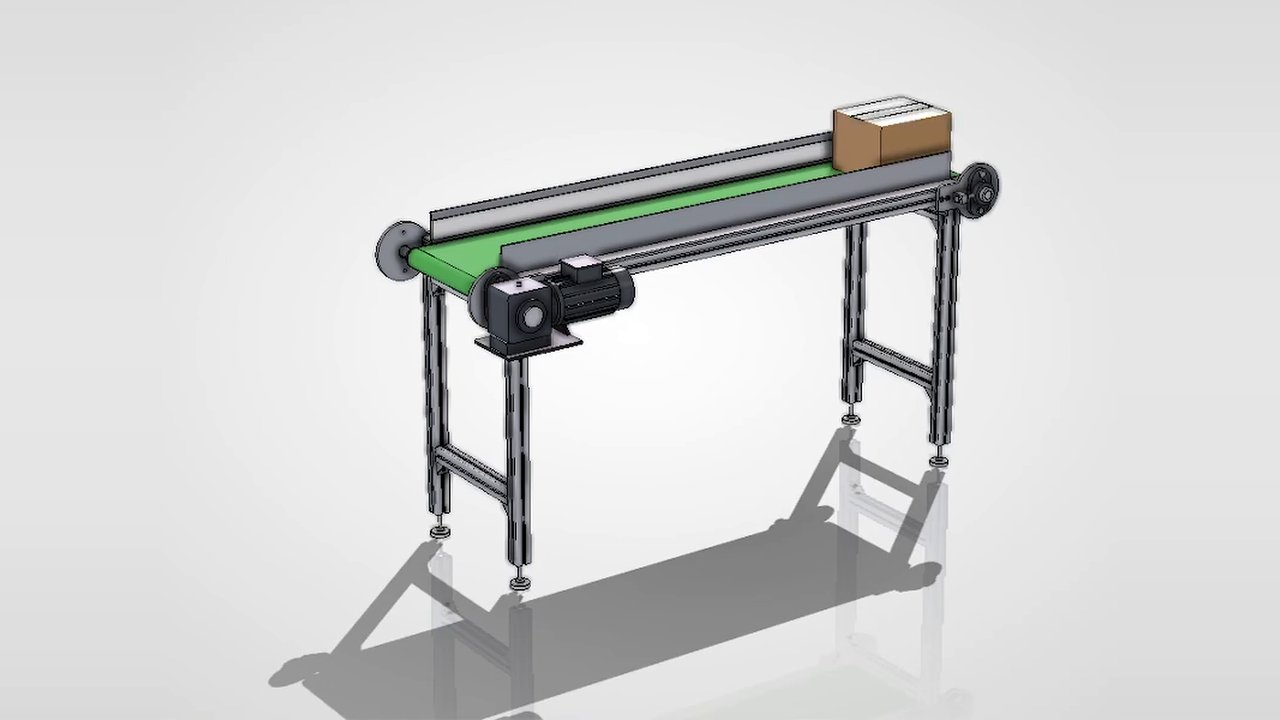
Complete machines (16). The belt conveyor has 34 components and 99 mates in three lengths, and it added a leg nobody asked for.
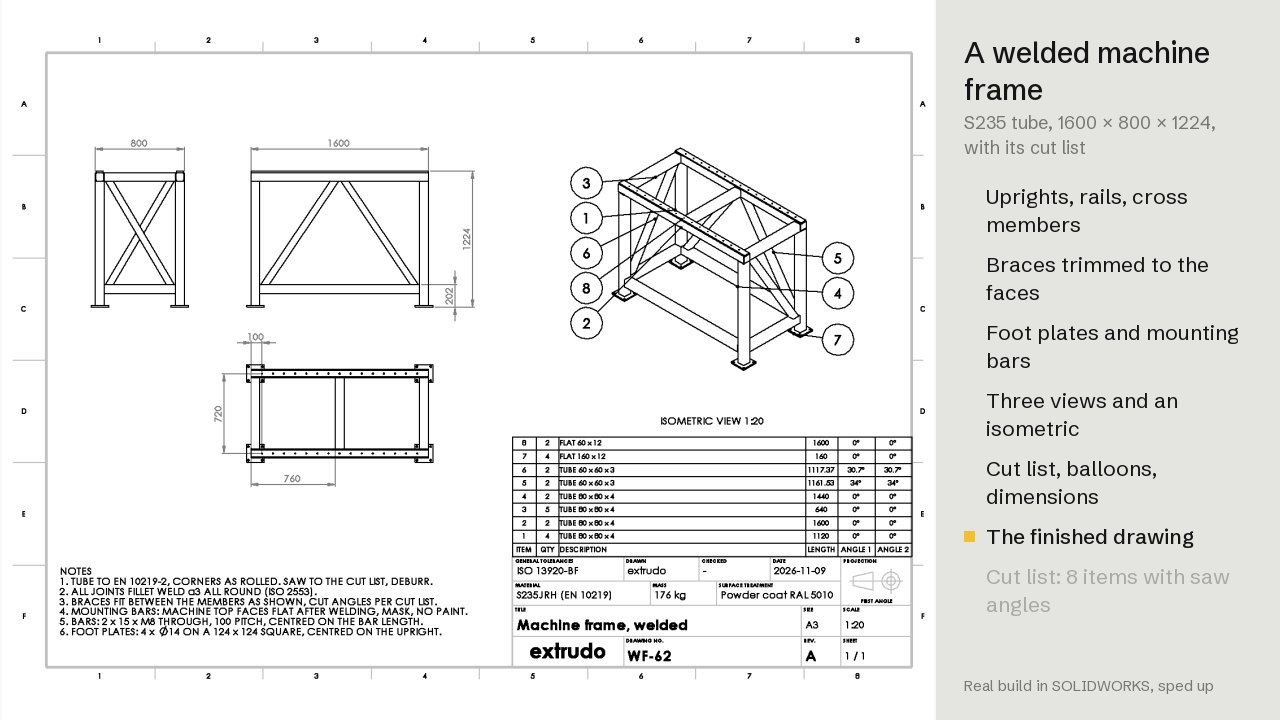
Welding and machine frames (13). A week ago we had nothing to show you here, because our tools couldn't drive SOLIDWORKS' structural members. So we added them after reading these answers: real weldment members along sketch lines, mitred or butted corners, trimming, and a cut list straight from SOLIDWORKS onto the drawing. Our test frame is 10.88 m of 80 x 80 x 4 tube with a cut list that matches the model.
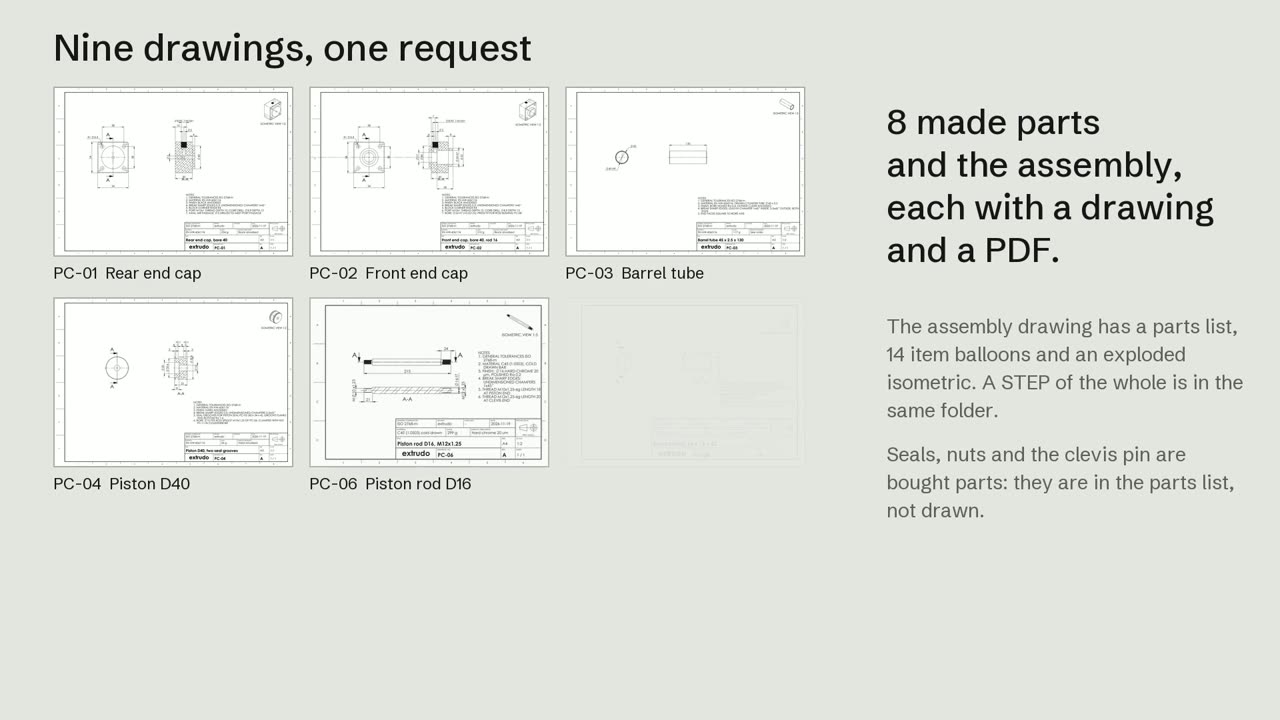
Gearboxes (4) and robots (8). The planetary gearhead has two stages and all its gears on view, and the robot arm comes with a full assembly drawing.
Aircraft and drones (11). You're the reason for the rotor head. Well, you and the view count.
What we're doing about it
A list like this is more useful than any roadmap we could have made up. The order we build examples in now comes from this chart, starting with the two biggest groups that don't have a good example of their own yet: machined parts (22) and plastics and moulds (15). The first plastics example is now on the use cases page: a moulded housing with draft, ribs and bosses, and a core and cavity split of its rear cover.
The form is still open, and it still asks the same question. If your kind of part isn't in our examples, tell us what you make. That's how welded frames got in.
FAQ
What do engineers want to use AI for in CAD?
Among the 131 people who answered on the extrudo waitlist, most named everyday machine building. Sheet metal came first, followed by machined parts, complete machines, and plastics and moulds.
Can AI do sheet metal in SOLIDWORKS?
Yes. extrudo has built sheet metal parts with real bends and flat patterns, including a control cabinet with seven sheet metal parts and a DXF of each with bend lines.
Does extrudo support weldments?
Its SOLIDWORKS tools can now place real structural members along sketch lines, set the corners, trim members and put a SOLIDWORKS cut list on the drawing.