Machines

Built by extrudo.

Eleven machines extrudo built in SOLIDWORKS, each one starting from an empty part: real part files, mates and motion. These are the hard cases. For everyday work such as sheet metal, drawings and edits, see the use cases.

  • Finished modelthe assembly moving in SOLIDWORKS
  • Watch it buildthe recording of the build, sped up
  • Started fromwhat extrudo was given
The exhaust nozzle turning while its petals open and close

Exhaust nozzle · 283 components, petals driven through their linkage

Started from a STEP file of loose surfaces

Jet engine

Rebuilt natively from a STEP file of 32,072 loose surfaces, with no solids and no features in it.

Part files
73
Length
755.3 mmSTEP: 755.15 mm
Profile check
0.03 mm
How it was built Build 25

The STEP held only surfaces. It was measured section by section, then every part was modelled as its own feature tree in the engine's frame and mated into one assembly. Each profile was checked against the STEP to 0.03 mm at four angles; each part build was logged and replayed from an empty SOLIDWORKS.

Logged builds
14
Moving nozzle
283components
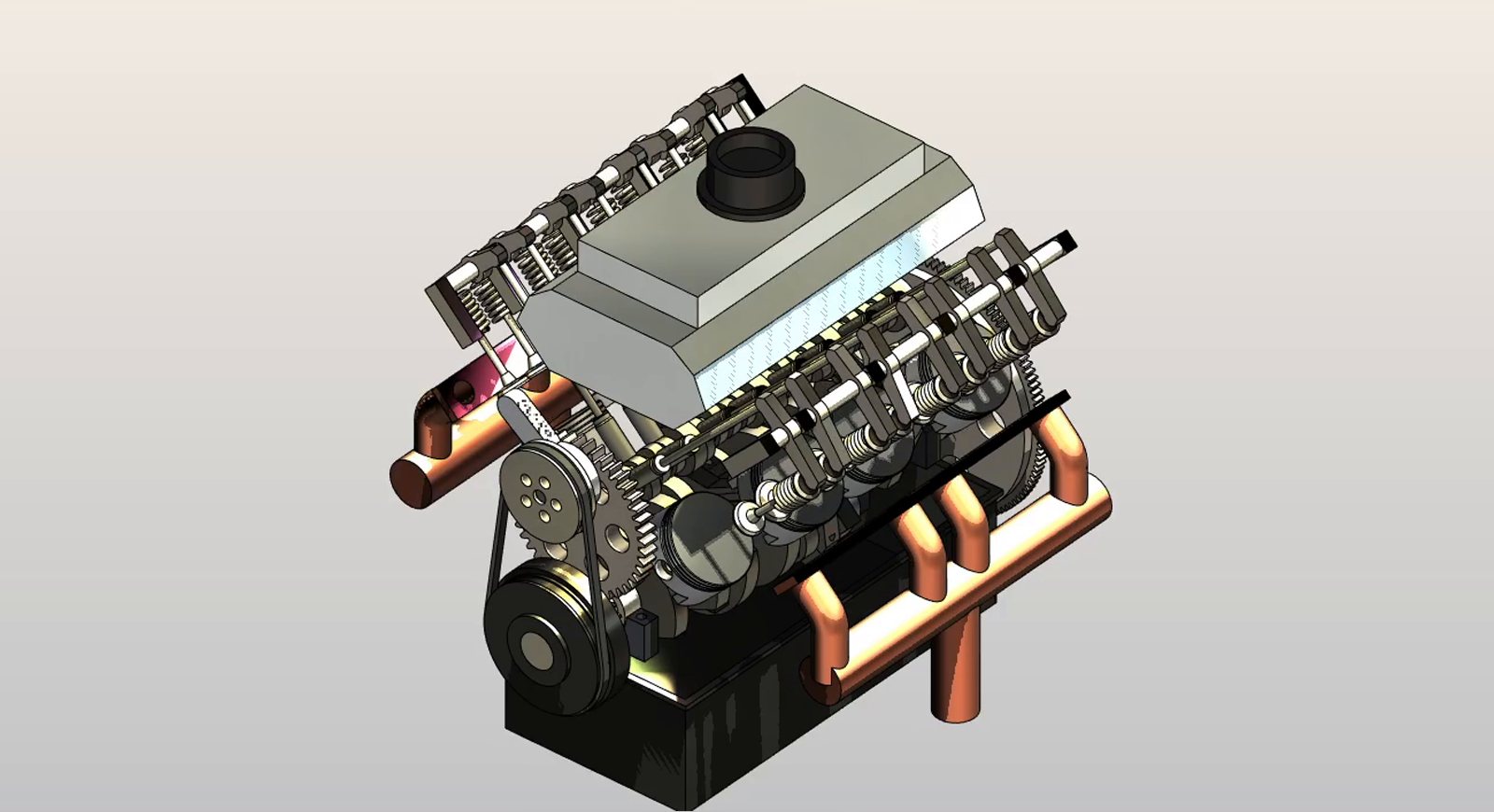
The V8 running in SOLIDWORKS: pistons, rods, cam and valvetrain moving

V8-00_engine.SLDASM · motion study, driven by the crank

Started from a prompt and a written spec

V8 engine

A running 5.75-litre V8 you can see into: cross-plane crank, a cam at half speed and 16 valves on pushrods, all moved by the crank alone.

Part files
35
Components
213
Mates
261
How it was built Build 47

One driven part. Only the crankshaft turns. Through the mates the camshaft follows at exactly half speed on its 22:44 gears, the lifters, pushrods and rockers open the valves, and the belt turns the water pump at 1.5 times crank speed. Bore 102 mm, stroke 88 mm, firing order 1-8-4-3-6-5-7-2.

Steps
1,3440 failed
Build time
64 min
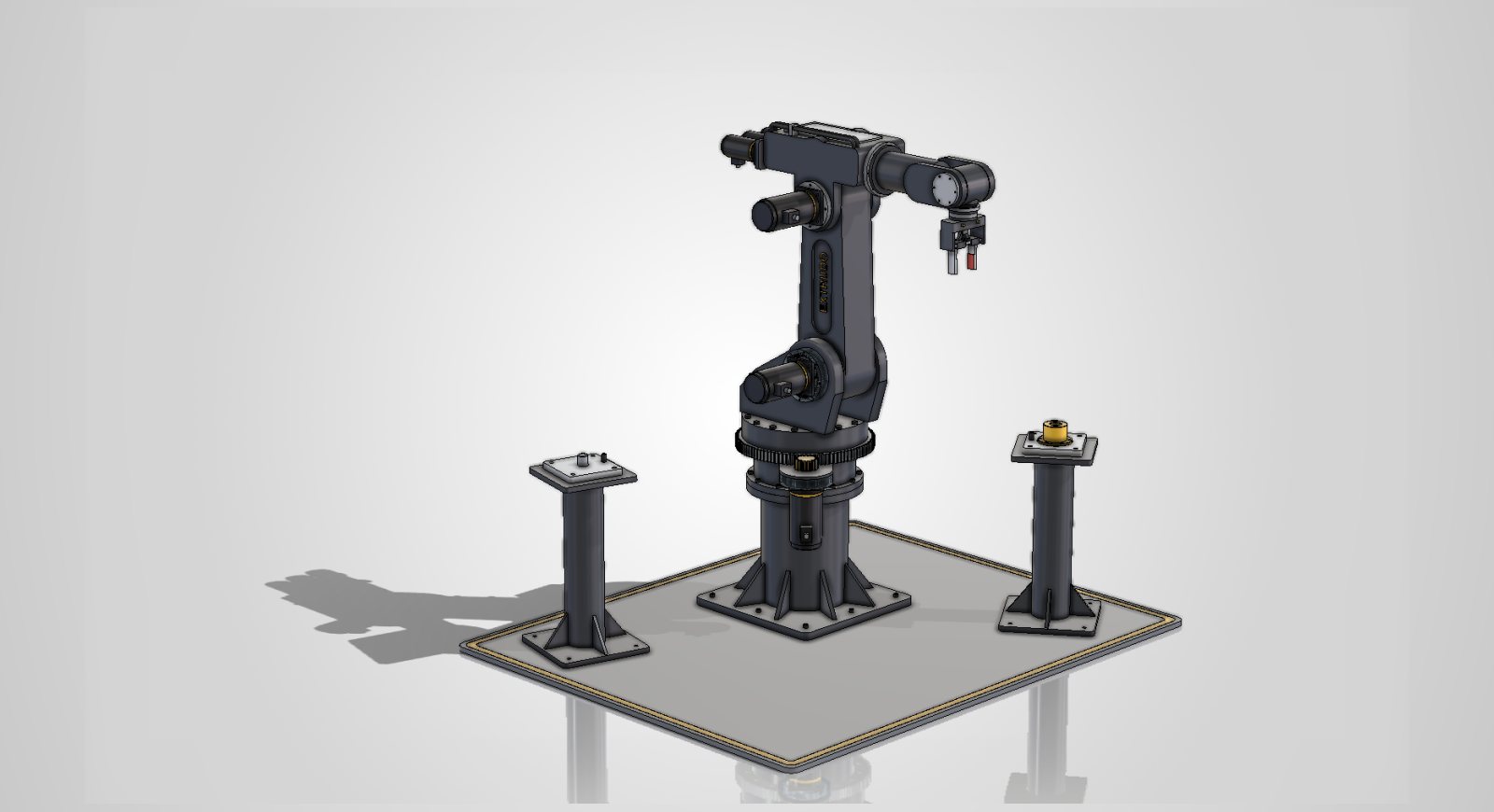
The robot arm picking a hub from the nest and placing it on the fixture

RA-00_robot-arm.SLDASM · pick-and-place from the solved joint angles

Started from a prompt and a written spec

6-axis robot arm

A servo and a planetary reducer on every joint, a gripper on a real linkage, and a work cell to pick and place in.

Part files
28
Components
62
Mates
68
How it was built Build 46

Real gear trains in the joints. J1 turns on a 104-tooth slewing ring driven through a 26:1 reduction; the J1 and J2 planetary stages are see-through so the gears show, J2 carries a spring counterbalance, and the gripper closes through a toggle linkage. Driving J1 or J2 alone puts every gear where the kinematics predicts, and SOLIDWORKS found no clashes at 40 poses of the pick-and-place.

Steps
8210 failed
Build time
14 min 8 s
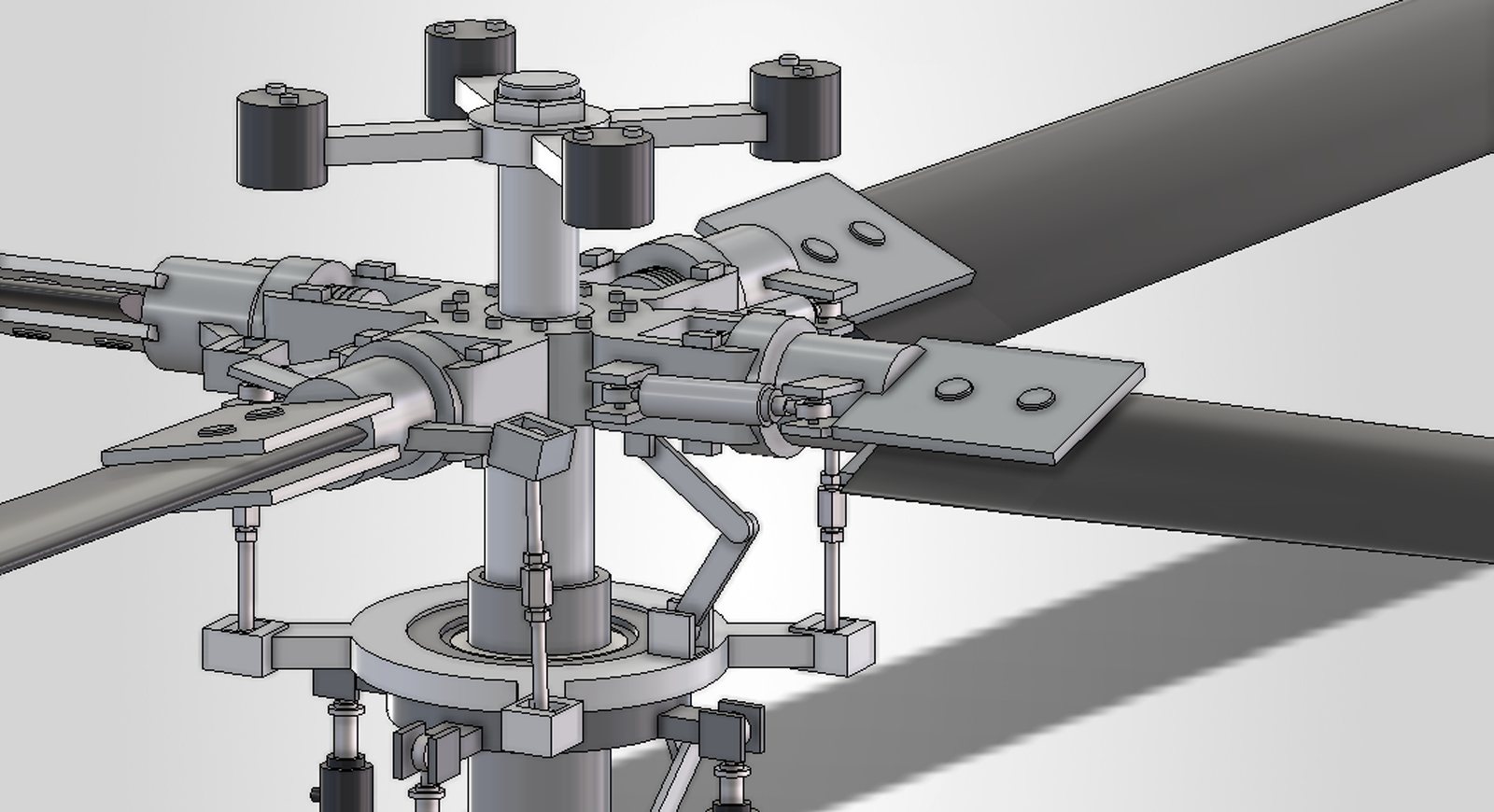
The rotor head turning while the swashplate tilts and the blades change pitch

RH-00_rotor-head.SLDASM · motion study: mast turn, swashplate tilt, blade pitch

Started from public photos and figures

Helicopter rotor head

A four-blade rotor head with its swashplate: three servo pistons tilt the plate, pitch links turn the blades as the mast spins.

Part files
15
Components
33
Mates
74
How it was built Build 56

Closed loops that really solve. The mast turns once while three servo pistons tilt the swashplate up to 5.35 degrees; the rotating star follows it round and the pitch links twist each blade as it passes, so blade pitch changes through the turn. The start pose matches the kinematics worked out first to 0.001 mm.

Steps
4670 failed
Build time
14 min 35 s
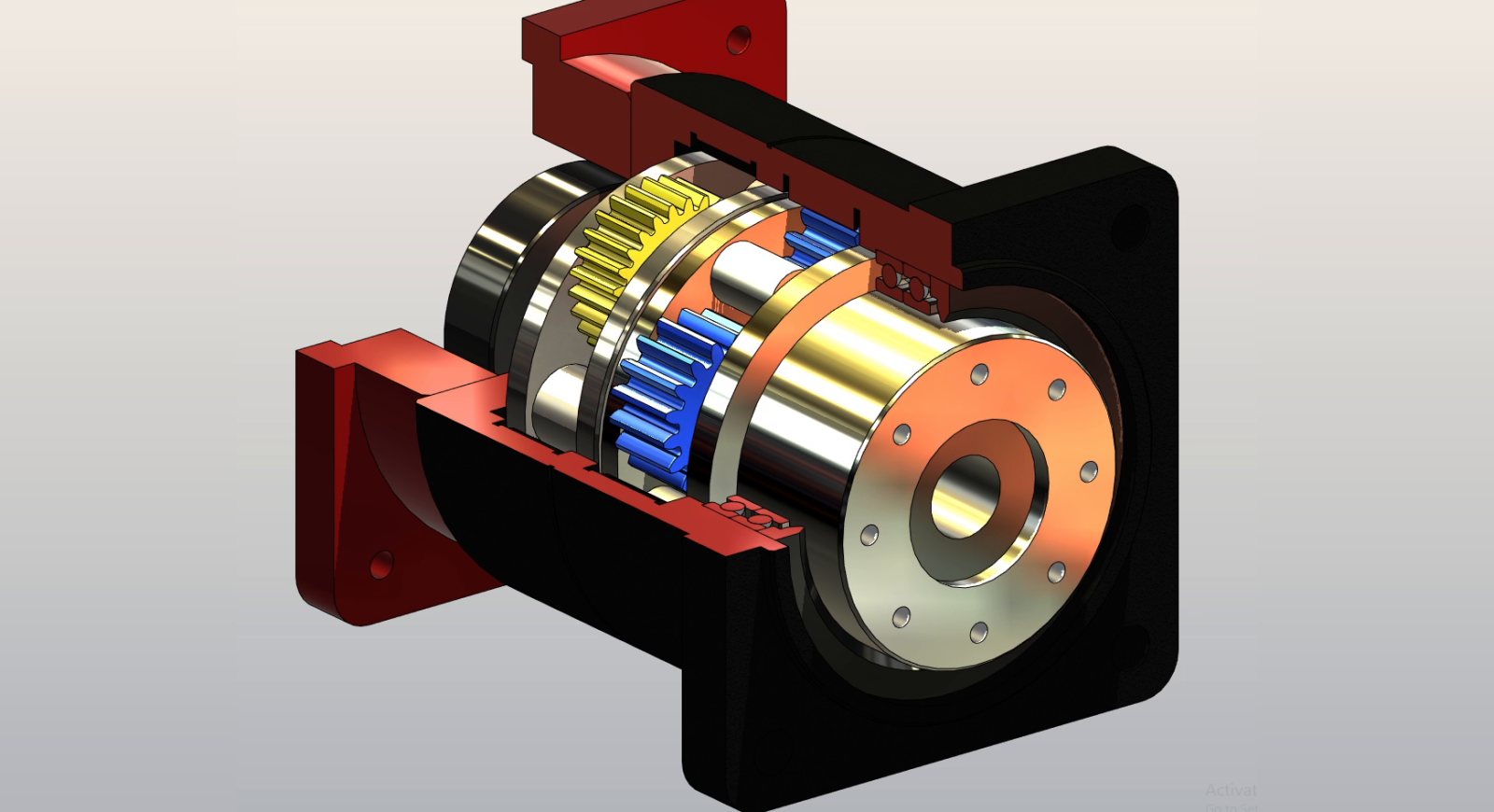
The gearhead turning in SOLIDWORKS: input shaft, planets and output flange

GB-00_planetary-gearhead.SLDASM · input shaft driven, output at 1/20

Started from a prompt and a written spec

Planetary gearhead

A two-stage servo gearhead, 20:1, with real involute teeth and the housing cut open so both stages show.

Part files
16
Components
32
Mates
50
How it was built Build 48

Both stages on view. An 18-tooth sun drives three 27-tooth planets in a 72-tooth ring (5:1); their carrier drives a second sun with four planets in a 54-tooth ring (4:1). Turning the input shaft through the gear mates, SOLIDWORKS moved the output flange exactly one twentieth as far: 7,358° in, 367.9° out.

Steps
3670 failed
Build time
11 min 42 s
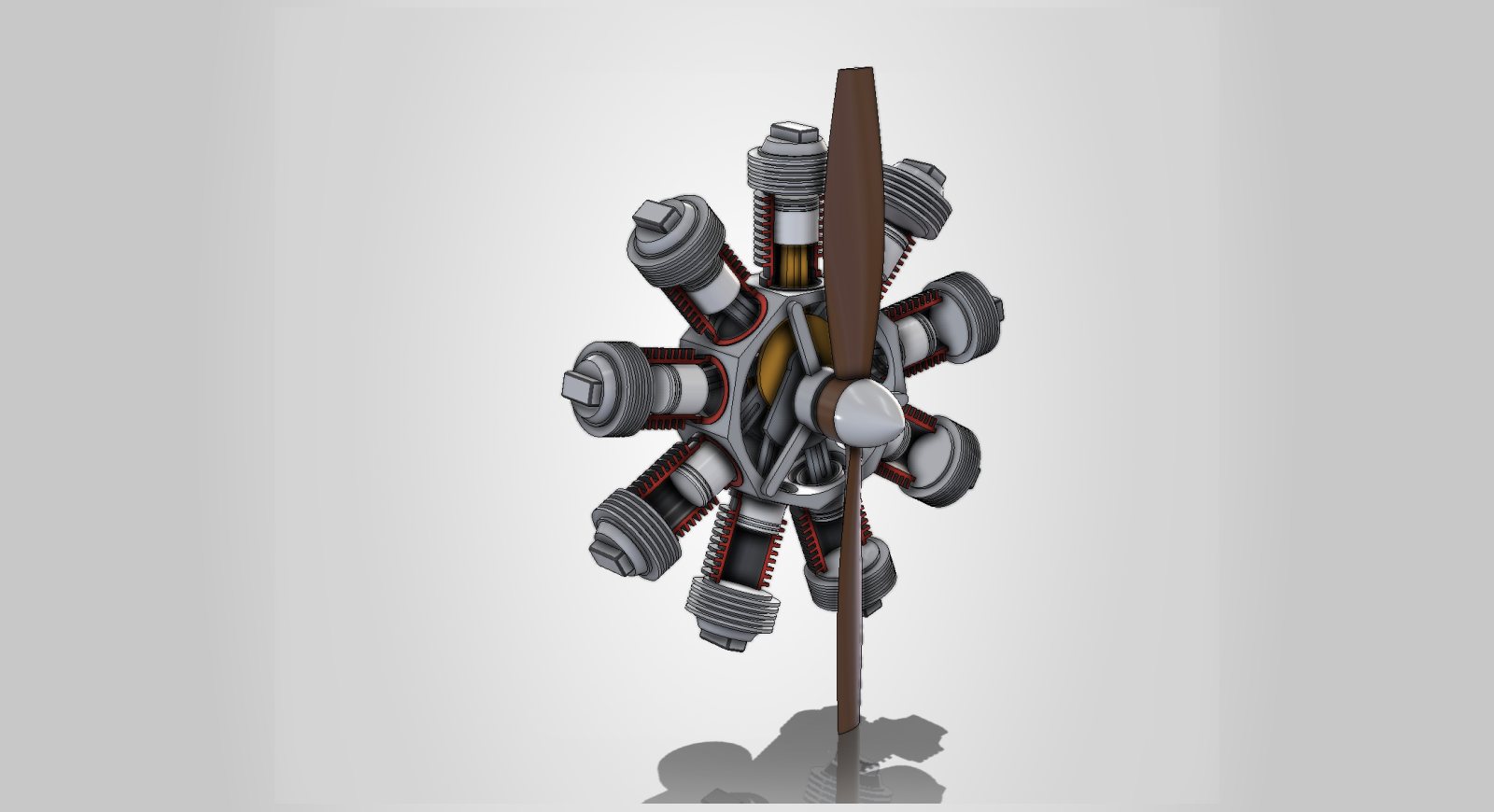
The radial engine running: pistons, rods and propeller turning

RE-00_radial-engine.SLDASM · motion study, one crank turn

Started from a prompt and a written spec

Radial engine

Nine cylinders, cut open, run by a single crankshaft.

Part files
7
Components
30
Mates
39
How it was built Build 27

A master rod and eight link rods on one crank throw. The crankcase and the nine cylinders are fixed and only the crankshaft is driven. One turn moves every piston through its 40 mm stroke, spins the propeller and brings each part back to where it started.

Steps
2130 failed
Build time
9 min 2 s
The rover's rockers and bogies working, wheels turning, mast and arm moving

PV-20_perseverance.SLDASM · motion study: rocker-bogie, mast, arm

Started from public photos and figures

Mars rover

A fan model of a six-wheel Mars rover with a working rocker-bogie: the rockers tied through a differential bar, the bogies, the mast and the robotic arm.

Part files
15
Components
21
Mates
38
How it was built Build 55

The suspension really works. When the left rocker rises 8 degrees the differential bar turns 2.87 degrees and the right rocker drops 8; the bogies tilt with them, all six wheels make a full turn, the mast head turns 50 degrees and the arm lifts its turret 846 mm while keeping it level. Each wheel has 48 grousers and six curved spokes.

Steps
4050 failed
Build time
9 min 45 s
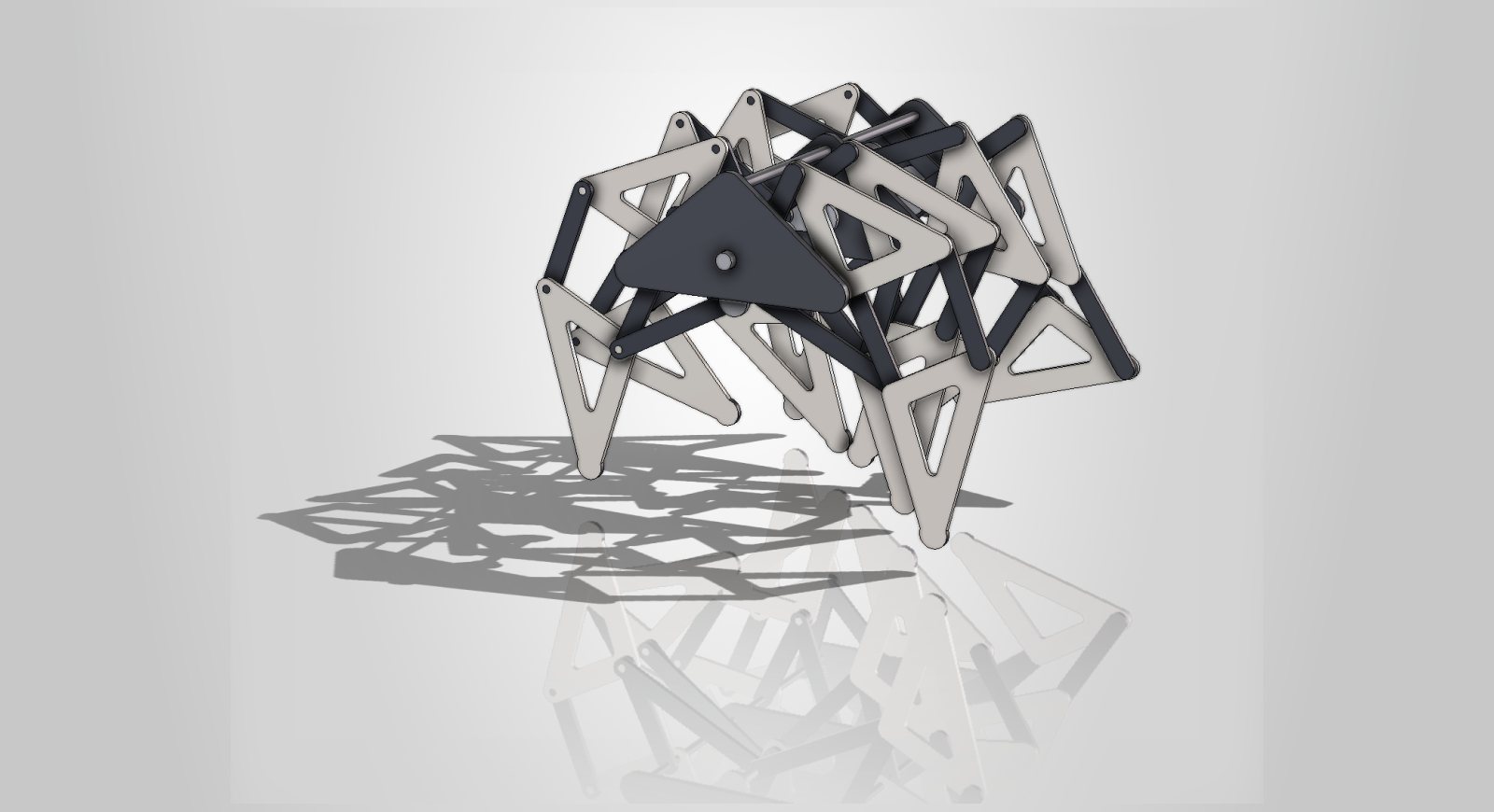
The eight-leg Jansen walker walking in a motion study

JW-00_jansen-walker.SLDASM · motion study, 20 rpm

Started from a prompt and a written spec

Jansen walker

Eight legs, one crank and 122 mates. It walks because the mates make it.

Components
50
Mates
122
Driven parts
1
How it was built Build 26

Every leg is a Jansen linkage of 4 mm plates on real pins, stacked at a 5 mm pitch. The frame is fixed and the crankshaft, with throws at 0, 90, 180 and 270°, is the only part that turns.

Steps
3240 failed
Build time
15 min 10 s
The tower's arms closing round the booster, which settles onto the rails

MZ-20_catch.SLDASM · motion study: arms close, booster settles

Started from public photos, at 1:100

Booster catch tower

An approximate 1:100 model of a launch tower whose two arms catch a returning booster: an X-braced tower, the carriage, the arms with their rams, the booster with 33 engines and four grid fins.

Part files
8
Components
10
Mates
16
How it was built Build 53

A catch in eight seconds. One X-braced bay is modelled once and patterned 18 times up the 1.46 m tower. In the motion study both arms close 30 degrees, the rams follow through their linkage, and the booster settles 150 mm onto the rails; every part returns to where it started.

Steps
2490 failed
Build time
8 min 9 s
The swivel nozzle turning down while the lift fan doors open and the fan spins

FB-00_f35b-liftsystem.SLDASM · motion study: nozzle down, doors open

Started from public drawings and a patent

STOVL lift system

An approximate model of a jet's short-take-off lift system: a shaft-driven lift fan with its doors, and a three-bearing swivel nozzle that turns the exhaust straight down.

Part files
12
Components
13
Mates
19
How it was built Build 54

Three bearings, one swivel. The nozzle is three segments on bearing planes tilted 65 degrees; turning the first segment 70.67 degrees and the other two 144.72 degrees against each other points the exhaust straight down, the angles solved on paper first and matched by the motion study. The lift fan's two stages turn opposite ways and its doors swing open.

Steps
2820 failed
Build time
7 min 30 s
The tail-sitter in SOLIDWORKS: fan turning, control vanes and turret moving

VB-20_vbat.SLDASM · the finished model taking off

Started from a public spec sheet

Tail-sitter VTOL drone

An approximate model of a ducted-fan tail-sitter: the fan with its stators and eight control vanes, the engine, the legs, the sensor turret and a 3.8 m wing.

Part files
6
Components
13
Mates
20
How it was built Build 52

Lofted wing, ducted fan, moving vanes. The wing is lofted from NACA sections on both sides with raked tips; the airframe stands 2.9 m on its legs. In the motion study the fan turns nine times in four seconds, each of the eight vanes swings 24 degrees and the turret pans 60 degrees, and every part ends where it started.

Steps
2810 failed
Build time
7 min 35 s

Screen recordings of SOLIDWORKS driven by extrudo. extrudo is not affiliated with or endorsed by Dassault Systèmes.

Get started

Build with us.

Windows, with your own SOLIDWORKS licence. The free build needs only your email.